We use cookies to ensure that we give you the best experience on our website.
PEPLINK · BRIEFLY EXPLAINED
What does SpeedFusion do?
SpeedFusion uses several suitable internet connections within a shared VPN tunnel. The three functions serve different purposes:
Bandwidth Bonding – use the bandwidth of multiple WAN connections for a shared data stream.
WAN Smoothing – send redundant packets to reduce the effects of packet loss and jitter. This requires additional bandwidth.
Hot Failover – preserve ongoing sessions through the remaining tunnel paths when a connection fails.
This requires compatible routers, a reachable endpoint, suitable WAN connections and the required features or licences. Uninterrupted availability is not guaranteed.
A constellation in low Earth orbit. Shorter signal paths. Laser links between satellites.
Starlink by SpaceX uses a satellite constellation in low Earth orbit. Short signal paths can support interactive applications such as VPN, VoIP and cloud services; actual performance depends on location, service plan and connection conditions.
Starlink is a satellite internet service from SpaceX with thousands of satellites in Low Earth Orbit (LEO). Starlink describes the orbital altitude as approximately 550 km (official technology information, accessed on 6 November 2026). The shorter distance to Earth reduces the signal path compared with geostationary satellites. Latency and data rates are not fixed, guaranteed values: location, service plan priority, network load, a clear view of the sky and installation affect the connection. A constellation spanning the globe does not mean that the service can be ordered or lawfully used everywhere.
Key benefit 1
Low Earth Orbit – physics rather than marketing
Low Earth orbit significantly shortens the signal path compared with a geostationary orbit. End-to-end latency also depends on routing, ground stations, network load and the destination server.
LEOShorter signal path
✓Starlink LEO (approx. 550 km)
Lower latency can support VPN, remote desktop and video calls. Whether an application works reliably also depends on packet loss, available bandwidth, the connection and the endpoint.
GEOLonger signal path
✗GEO satellite (approx. 36,000 km)
The longer signal paths in GEO result in higher latency and make time-sensitive interaction more difficult. This does not make GEO connections universally unusable; their suitability depends on the application, protocol and service.
Key benefit 2
Laser links between Starlink satellites (OSL)
Optical intersatellite links (ISLs), referred to by Starlink as Optical Space Lasers, connect satellites into a network in space. They carry data between satellites; this does not imply a universal 30 per cent improvement in end-to-end latency over fibre.
Laser mesh benefits
Data can be routed between satellites without using a ground station for every intermediate step.
Access to the terrestrial internet still requires ground infrastructure and network gateways.
Alternative paths can support routing, but do not guarantee uninterrupted availability.
The benefit over long distances depends on the selected path and reachable network gateways.
Technical specifications
Transmission: optical laser links
Connection: between satellites
Network structure: inter-satellite mesh
Context: Link capacity is not the download speed of a customer terminal.
Live tracking
The constellation in real time
The external tracker displays Starlink satellite positions on an interactive map. The display is not evidence of service availability at a particular location:
Construction site connectivity with Starlink + Peplink
At temporary construction sites, Starlink can serve as a WAN link if there is a clear view of the sky, power, suitable hardware and a service plan usable at the location. With the appropriate configuration, a Peplink router can switch to LTE/5G if that connection is reachable. Simple WAN failover does not necessarily preserve sessions: SpeedFusion Hot Failover requires suitable features and a reachable endpoint. If all connection paths or the power supply fail, this solution is also interrupted.
Features used: Hot Failover, SpeedFusion VPN, WAN Smoothing
At sea and in vehicles, suitable hardware for the intended use, secure mounting, power, an appropriate service plan and the applicable permissions are required. Peplink SpeedFusion can combine Starlink with available LTE/5G; cellular connectivity is not generally available on the open sea. Bonding requires multiple usable connections, suitable features and a reachable endpoint. Structures, movement or outages can still affect the connection; uninterrupted connectivity is not guaranteed.
Features used: SpeedFusion Bonding, WAN Smoothing, Hot Failover
In areas without DSL or fibre, Starlink can be an alternative connection. Availability at the site, a clear view of the sky, suitable hardware, a service plan and power must be checked in advance. A suitable Peplink router can integrate available LTE/5G as an additional WAN path. Load balancing distributes connections; packet-level SpeedFusion bonding requires suitable features and a reachable endpoint. Additional connections can reduce dependencies, but do not eliminate outages.
Features used: WAN Load Balancing, Hot Failover, QoS
Disaster Recovery – an additional connection path during infrastructure outages
During natural disasters or infrastructure outages, Starlink can provide an additional connection path. This requires an available terminal, power, a clear view of the sky, an activated suitable service plan and a usable service; no fixed deployment time is promised. Peplink SpeedFusion can establish encrypted VPN tunnels to a reachable endpoint. The satellite connection can bypass local terrestrial access paths, but still depends on the Starlink network, ground infrastructure and network gateways. Hypria is intended to address operational requirements of fire services, THW and other relief and emergency response organisations; wirelessmaxx supports preventive connectivity and resilience needs, for example for hospitals, utilities and energy organisations. This is the internal division of company responsibilities, not an official KRITIS classification or a statutory protection priority.
Features used: SpeedFusion VPN, Hot Failover, InControl 2
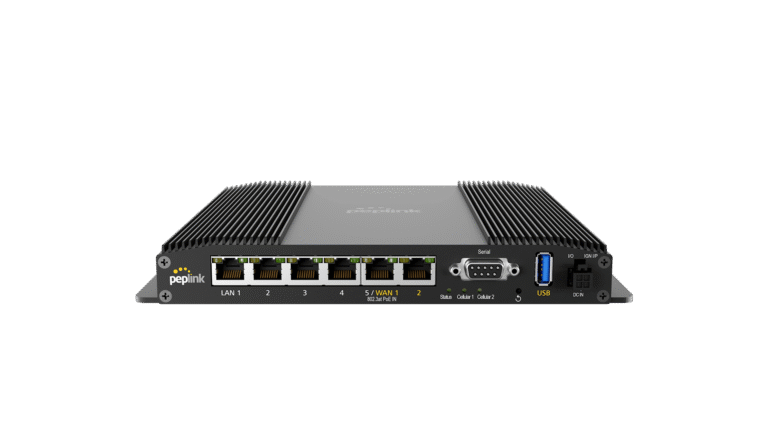
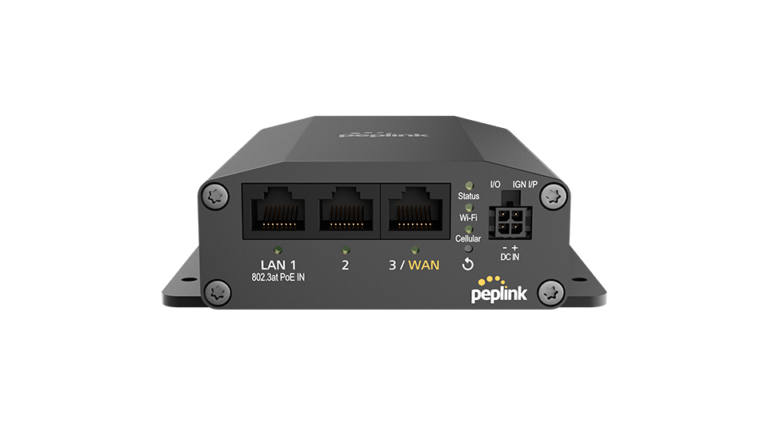
Recommended routers: MAX BR1 Pro 5G, MAX Transit Pro
Starlink can be integrated as a WAN source into suitable Peplink routers through an appropriate Ethernet connection. The connection or adapter, firmware, router performance and required SpeedFusion features must be checked for each model; bonding also requires a reachable endpoint. The following model overview is for guidance, not a blanket compatibility promise:
Category
Models
Starlink suitability
Mobile routers (MAX)
BR1 Pro 5G, BR2 Pro 5G, Transit Pro
Starlink as the primary WAN + LTE failover
Enterprise (Balance)
Balance 310X, 380X, 580X, 710
Starlink bonding with fixed-line WANs
Branch (B One)
B One, B One 5G, B One Plus
Starlink for branches without a fixed-line connection
With connecting.works GO – managed internet connections we start with your requirements and tailor the connection, network integration and support to the specific deployment. Starlink and Peplink may be suitable components. We offer Starlink terminals exclusively with a plan and service; accessories can be purchased separately in the eStore. Suitability, availability and scope of service are assessed and agreed for your connection solution.