Business continuity & high availability
Hot Failover – Maintain sessions when switching WAN paths
Hot Failover is part of the SpeedFusion™technology from Peplink. If a WAN path fails, traffic can continue over an already available alternative path within the SpeedFusion tunnel. Maintaining active sessions depends on the configuration, remote endpoint and remaining connection quality.
Backup
Available alternative path
Definition: Hot Failover is switching between available WAN paths within a SpeedFusion connection. A configured alternative path can take over traffic to the same reachable remote endpoint, allowing active sessions to be maintained within the overlay. The public IP addresses of the individual WAN connections are separate from this.
Standard failover vs. Hot Failover
With conventional WAN failover the router switches to a backup connection after detecting a failure. The time taken and effects on sessions depend on health checks, configuration and the application. A change in the public IP address can interrupt sessions. Hot Failover, by contrast, uses the existing SpeedFusion connection.
Standard failover
Manufacturer's animation illustrating the principle: switching WAN paths can interrupt sessions and change the public IP address.
Peplink Hot Failover
Manufacturer's animation illustrating the principle: an available alternative path can maintain sessions within the SpeedFusion tunnel.
The technical challenge of standard failover
With simple standby failover, the router detects a failure using configured checks and switches to an available backup medium such as LTE. The detection and switchover time depends on the configuration. If the public IP address changes or an interruption lasts longer, existing sessions may need to be re-established. Possible consequences:
VPN tunnels to data centres may need to be re-established
VoIP calls may be interrupted
Cloud apps (ERP/CRM) may need to reconnect
Remote access to SCADA systems may be temporarily unavailable
How Peplink Hot Failover works
The method can support session continuity through a VPN overlay. Requirements include a suitable Peplink device with appropriate firmware and the required licence or a valid service plan, at least two usable WAN paths and a reachable SpeedFusion remote endpoint, such as a Peplink router, FusionHub or SpeedFusion Connect. Protected application traffic must be routed through the tunnel. The router and remote endpoint need power; common causes of failure, bandwidth, latency and tariff limits on the remaining paths remain relevant. The principle in five steps:
1The Peplink router establishes a SpeedFusion VPN overlay tunnel over the WAN paths configured and usable for this purpose to the remote endpoint.
2During normal operation, the configured WAN priorities and traffic rules determine path usage, for example by prioritising the fibre connection.
3The configured alternative paths are included in the connection. Connection checks help identify which paths are usable.
4If a path in use fails, traffic can continue via an available alternative path to the same remote endpoint. Switchover time depends on detection, configuration and path quality.
5The tunnel can IP continuity in the overlay be maintained. Whether TCP and application sessions continue also depends on the remote endpoint, timeouts and the remaining connection.
Practical example: Microsoft Teams video call
Illustrative scenario: During an important video conference, the fibre line is severed by construction work.
Without Hot Failover: The call may stall or drop. Depending on the alternative connection and application, it may be necessary to reconnect.
With Peplink Hot Failover: The call may continue over an already available alternative path if it is routed through the SpeedFusion tunnel and both the remote endpoint and backup connection are reachable and have sufficient capacity. Stalling or disconnections remain possible; behaviour must be tested in the specific setup.
Operational benefits for business continuity
BSI IT-Grundschutz: NET.3.2.A292023 edition, Firewall module: independent external connections, highly available components and a secure firewall structure even after failover. Hot Failover alone does not meet these requirements.
NIS2: Article 21(2)(c)Business continuity includes backup, disaster recovery and crisis management, among other things. Hot Failover can be a technical component, but is not proof of compliance.
An overall approach, not a promise of certificationRedundancy must suit the risks, applications and operational processes. A single router feature guarantees neither availability nor legal compliance or certification.
Switchover time is not the RTOWAN switchover time describes the change of path. The recovery time objective (RTO) concerns restoration of the affected operational process and must be planned and tested for the system as a whole.
Whether legal requirements apply depends on activities, applicable law and, where relevant, thresholds, not on a router feature. wirelessmaxx supports precautionary connectivity and resilience needs, for example those of hospitals, utilities and the energy sector; its sister company Hypria is intended to address operational response needs of fire brigades, THW and other aid and emergency response organisations. This is an internal division of services, not an official KRITIS sector classification or a statutory protection priority. More on the regulatory context in the entry KRITIS – Specification, preparedness & compliance.
Compatible Peplink devices
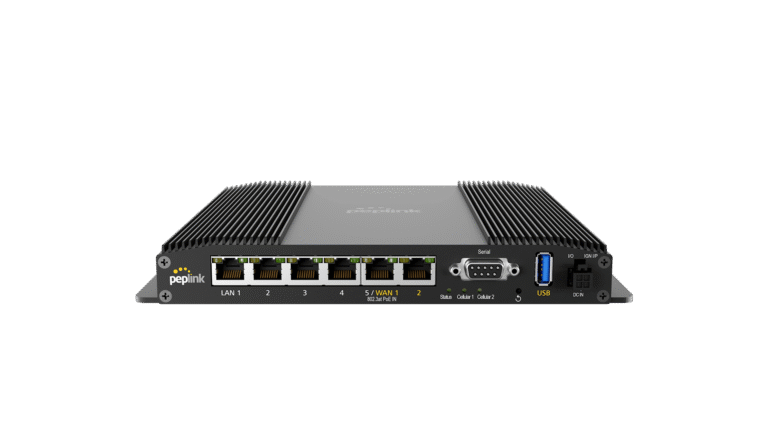
Balance 580X – 50 SpeedFusion VPN peers, up to 100 with the appropriate expansion licence
Balance 380X – 30 SpeedFusion VPN peers, up to 100 with the appropriate expansion licence
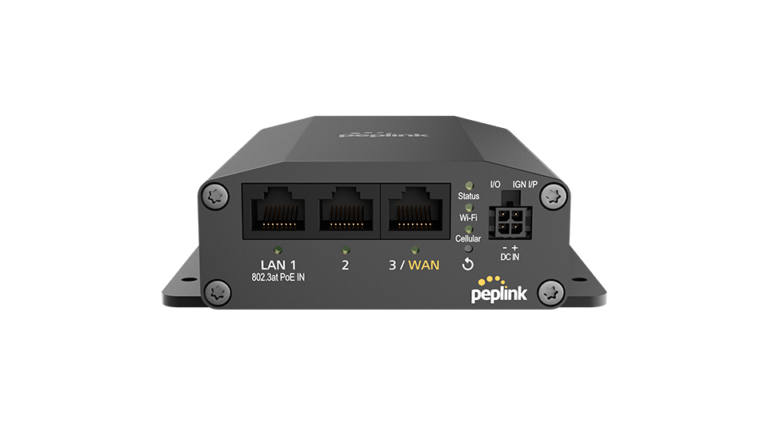
MAX BR2 Pro 5G – mobile Hot Failover
SpeedFusion Engine – hardware with mobile modems; FusionHub is the virtual SpeedFusion appliance
Resilience for business-critical applications
For your connectivity solution under connecting.works GO, we advise on connections, Peplink technology and a suitable SpeedFusion remote endpoint. The appropriate redundancy depends on your applications and operational requirements. More on the approach to resilient internet connections and business continuity.
Sources & further reading