


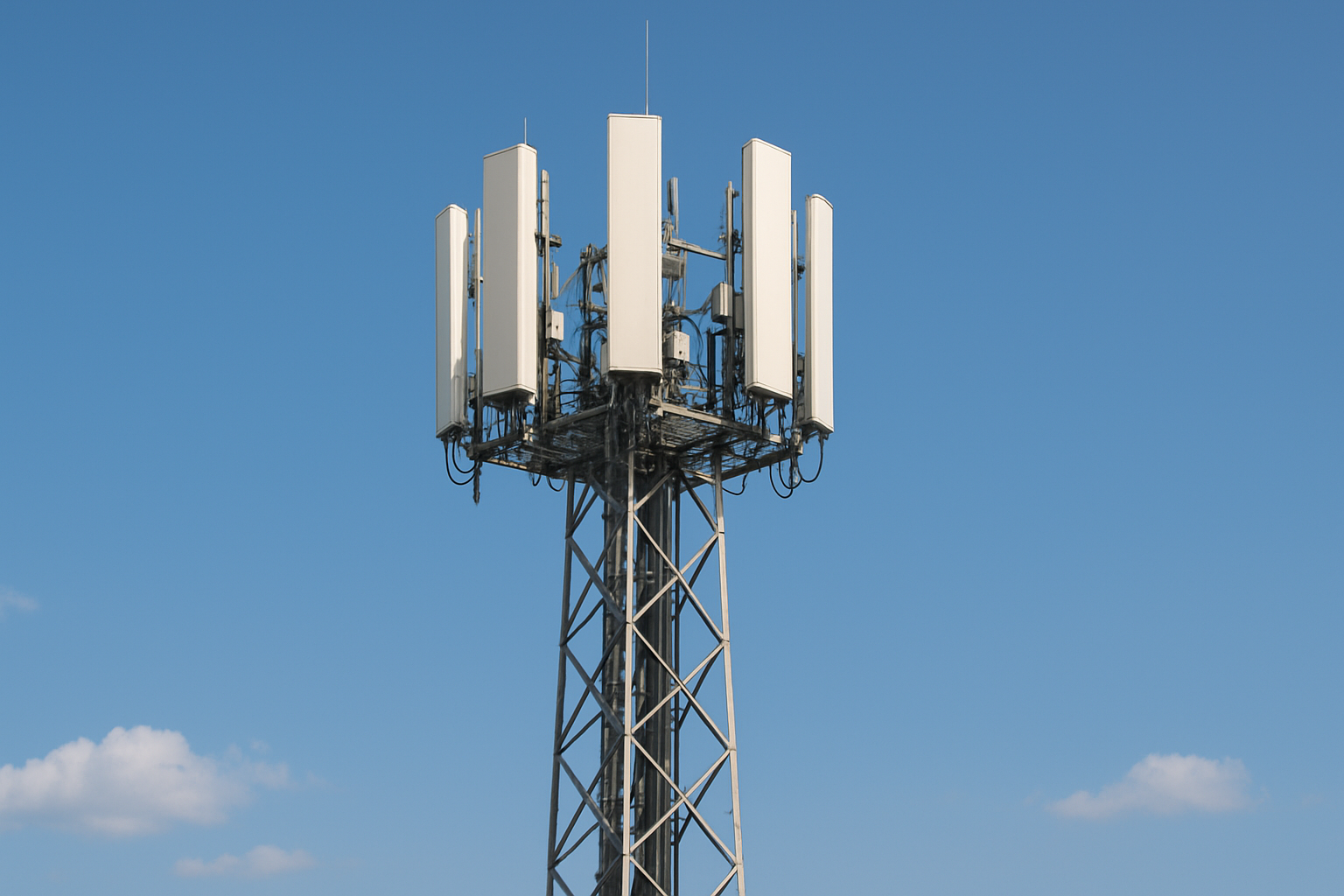
On Tuesday, May 6, 2025, a nationwide disruption occurred in the digital radio network of the BOS (authorities and organizations with security responsibilities). The impact was severe: Police, fire departments, and emergency services had to temporarily resort to alternative means of communication or were unable to communicate at all. Numerous control centers in Hesse were also affected.
Such incidents are rare, but not impossible—and that's precisely why they're so critical. They highlight how dependent our emergency communications are on central infrastructures—and how vulnerable these can be in an emergency.
Communication needs redundancy
In security-critical operational situations, communication must not be a factor of uncertainty. This applies not only to emergency services, but also to municipal facilities, energy suppliers, and operators of critical infrastructure. Yesterday's incident underscores what experts have been emphasizing for years: Without functioning backup systems, a failure poses an immediate risk to the public and emergency services.
One solution that is becoming increasingly important is satellite-based access – especially where mobile communications or traditional landline networks are either not available or overloaded in an emergency.
How can satellite-based systems help?
Systems based on low-Earth orbit satellites like STARLINK offer a clear advantage: They are independent of local infrastructure. This means that communication is possible even if cell towers fail, cables are damaged, or mobile networks are overloaded.
At wirelessmaxx, we've been working on such alternative solutions for years. These include not just traditional internet connections, but systems specifically tailored to disaster relief and public safety scenarios:
-
Mobile satellite backups that can be put into operation within minutes
-
Hybrid solutions that automatically combine satellite, mobile and other networks
-
Case solutions with their own power supply that also function autonomously in the field
These systems are not intended as a replacement, but as a complement – to bridge the gap, to secure and to improve operational resilience.
What remains of May 6th?
Above all, it's a reminder that the availability of communication cannot be taken for granted. The technical infrastructure is complex – and therefore vulnerable. Those responsible should at least consider what happens in the event of a failure – and how to be prepared.
In discussions with authorities and emergency services, we repeatedly experience that the will to take precautions is there – but concrete implementation is often lacking. Here, we want to support, not lecture. The technology is available, and the solutions are ready for use. What's crucial is that the issue is addressed early and seriously.
We are happy to share further information on our technical approaches and experiences in cooperation with BOS and municipal institutions upon request.
Further articles on the digital radio outage on May 6, 2025:
Split:
Civil-Military Cooperation 4.0: The role of wirelessmaxx in modern crisis management
Starlink und Managed Bonding: Die Zukunft der ausfallsicheren Unternehmenskonnektivität